
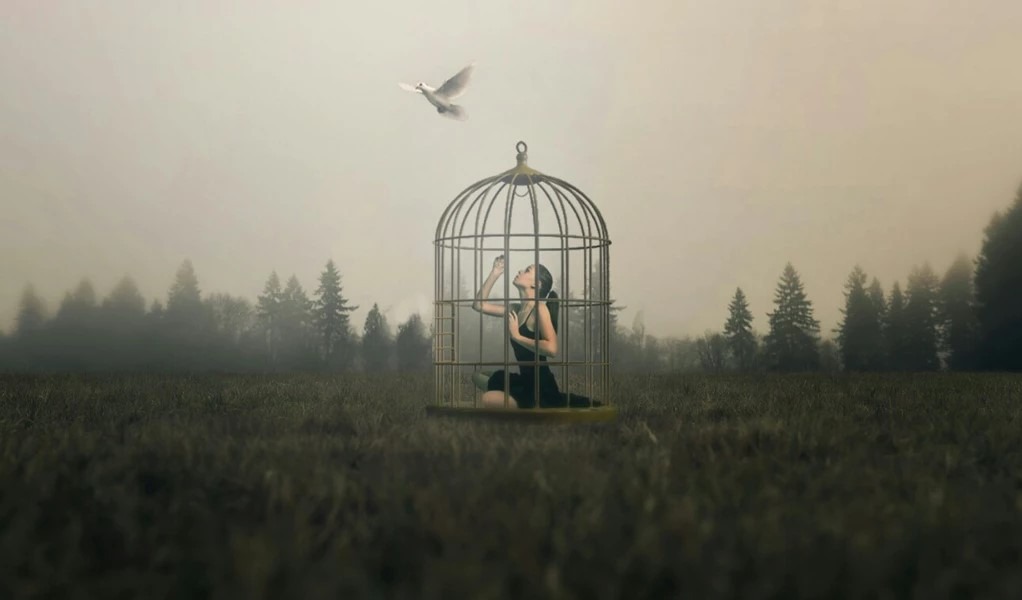
As I fumble through the fith week of lockdown, and more importantly, of not leaving the house, I feel my inner conflict rising instead of the ‘curve flattening’. I spit out those two words with great irritability. Shouldn’t I feel rested? At peace with myself and the general hush of other people’s opinions? Even as I welcomed the quiet time, I distrust the ease with which I embraced this isolation.
Now, as our future looks, at best, uncertain, confusing and daunting, I can’t help but wonder whether our needs have also changed. There is a certain kind of clarity that comes with any kind of tragedy, and what we want, and all the trivial earthly indulgences, doesn’t seem matter that much anymore.
What do we need in this new world? And what needs are better left in the world we once knew? Is there a new force that drives our emotions and actions? Will this pandemic now shape our destinies? Business as usual? I think not. Ever.
Though we are all uniquely moulded by our own life events, traumas and victories, for the first time our fates are intrinsically linked, and, to some extend, we’ve all reverted to our most basic of human needs.
What do you need?
We generally don’t even know what we want, so how do you know what you need? Sure, we are probably very in touch with our most basic physiological needs, when you’re hungry, you eat, when you’re tired you sleep. Normally your body will be very quick to point out what it needs. And, yes, there are many people out there who’s very basic, most fundamental needs are not met, they are hungry and cold and scared. It fills me with a sense of sadness and helplessness. Some, perhaps for the first time, will start to catch a glimpse of what a less privileged life looks like. It’s not pretty and not for the faint hearted. And probably not worth living; you think to yourself as you reach for another stick of biltong while scrolling through the latest options on Netflix.
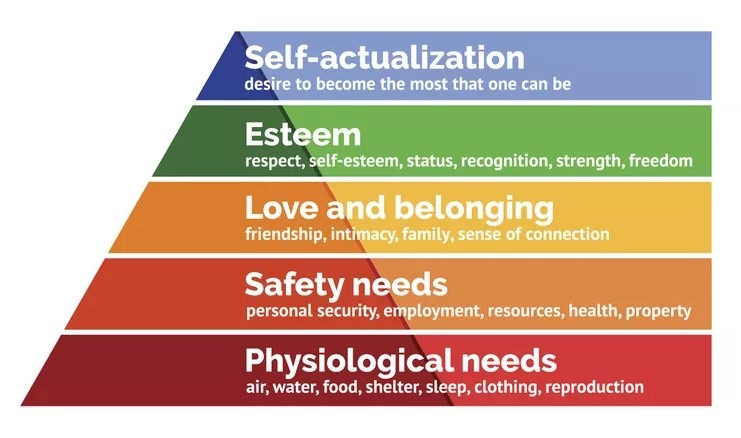
According to Abraham Maslow, what we need should look something like this. This is what motivates the human race. It explains why we do the things that we do. Or does it?
According to Klaus Grawe, our basic psychological needs boils down to these four:
- Attachment
- Control
- Self-esteem
- Increasing pleasure / avoiding pain
Tony Robbins talks about the needs that makes us tick:
- Certainty/Comfort
- Uncertainty/Variety
- Significance
- Connection/Love
- Growth
- Contribution
Then there is Mark Manson (my current favourite writer), who certainly knows how to call a spade a spade, who narrows it down to these four simple needs:
- Security
- Self-esteem
- Autonomy
- Connection
There is a lot of underlying truth here but ultimately we decide for ourselves. At least, I think that we should, but many of us just float along, mainly because some of our most basic needs are not being met. We do not know what we stand for, so we just keep going. Catch 22*.
Security
It looks like everyone agrees that we need to feel safe, secure in the knowledge that we will survive. For most that means somewhere to live, a steady income and solid relationships. Can you imagine what it feels like not to have that?! Many of us will see that darkness creeping up during this time. Will that change your opinionated, entitled, self-absorbed views of people who ‘just take up space’, because ‘anyone can make a living for themselves if they want to’, ‘they are just lazy’?! Not you! No, it will never happen to you.
This kind of control, or rather, the feeling that we have some control over our own lives is so important. When you start to believe that you cannot influence the events in your life, no matter what you do, when apathy sets in, this is the point when life loses its meaning. May you never reach this point.
Connection & Love
Fortunately, ‘there’s nothing you can do that can’t be done’. All you need is love! It’s that simple, we are pack animals and we need connection. This is why the lockdown is so difficult for some. Even for those of us who are more socially independent, the need for social interaction and connection becomes strong eventually.
Self-esteem
This is a tricky one. We yearn to feel significant from a very early age and this is probably what drives people to work their entire lives towards their legacy. The drive to feel important, needed, special, competent, appreciated and significant is paramount. We aim to achieve this by making a lot of money, wearing designer shoes, excelling at our jobs or sports or being the best parent in the world. We also achieve this by being the saddest sack on the block, the martyr who always get the shortest end, then there is sick Suzy, no one has ever been sicker than her. This is one need humans always find a way to meet, whether they realise it or not, even by dysfunctional means.
Autonomy
Some value their freedom (of choice) above all. Everyone wants to do their own thing to some extend, even if you like direction and being a part of something bigger than you. Have we unwittingly, but willingly handed over our right to self-government? Many of us are really starting to feel the frustration of limited autonomy.
During this difficult period we are stripped of the things that gave us our identity, but our fundamental needs remain. We need to constantly meet these needs in order to be happy, healthy human beings, but sometimes the lengths to which we go to to meet these needs defeats the purpose. By exploring our most basic needs, we can begin to understand why we do the things that we do.
* A catch-22 is a paradoxical situation from which an individual cannot escape because of contradictory rules or limitations. The term was coined by Joseph Heller, who used it in his 1961 novel Catch-22.


0 Comments